Introduction
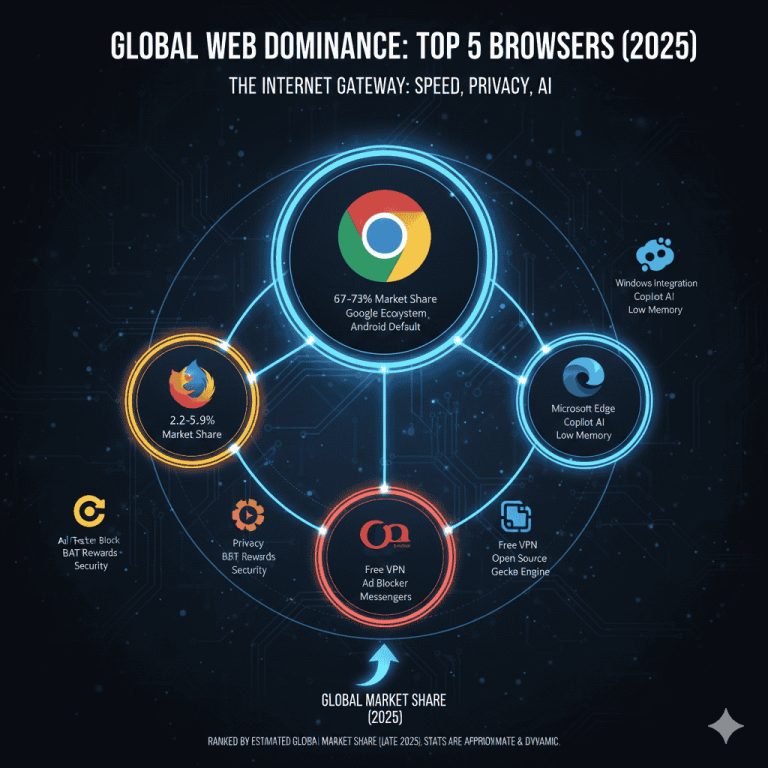
It’s 2026, and despite dozens of browsers available on Android — from Firefox and Opera to Brave and Vivaldi — Google Chrome still reigns supreme. The question isn’t about flashy new features; it’s about why no competitor has managed to truly replace Chrome as the go-to Android browser. The reasons are rooted in ecosystem dominance, user behavior, and market realities.
🔑 5 Reasons Why Chrome Alternatives Struggle on Android
1. Deep Ecosystem Integration
Chrome is tightly embedded into Android. It syncs seamlessly with Gmail, YouTube, Google Drive, and Search. Competing browsers can’t replicate this level of integration, making Chrome the default choice for convenience.
2. Default Status & User Inertia
Most Android phones ship with Chrome pre-installed. For everyday users, the path of least resistance is sticking with what’s already there. Alternatives require effort to download, set up, and trust — something many users simply don’t bother with.
3. Performance & Compatibility
Web developers often optimize sites for Chrome first. That means smoother performance, fewer bugs, and faster updates compared to other browsers. Alternatives sometimes feel slower or less reliable because they aren’t the “test bed” for most websites.
4. Developer Tools & Support
Google invests heavily in Chrome’s developer ecosystem — from debugging tools to security patches. Competing browsers lack the same scale of resources, which makes them less attractive to developers and, by extension, less polished for users.
5. Brand Trust & Market Dominance
Chrome benefits from Google’s global brand recognition. Users associate it with speed, security, and reliability. Alternatives may offer niche features (like privacy or customization), but they struggle to build the same level of trust and mainstream adoption.
⚖️ Conclusion
The lack of a true Chrome alternative on Android isn’t about missing features — it’s about ecosystem lock-in, user habits, and Google’s dominance. While browsers like Brave, Vivaldi, and Firefox offer unique advantages, they remain niche players. Unless a competitor delivers something radically different that breaks Google’s grip, Chrome will continue to be the default Android browser in 2026.
✨ Optimized takeaway: Chrome isn’t unbeatable because of innovation — it’s unbeatable because of integration, convenience, and trust.

Thank you for visiting our site! Please share this post with your friends. If you’d like us to create a new post about this topic or have suggestions for improvement, feel free to let us know in the comments, on Telegram, or via email at
You Can Also Join US on Telegram & Whatsapp